
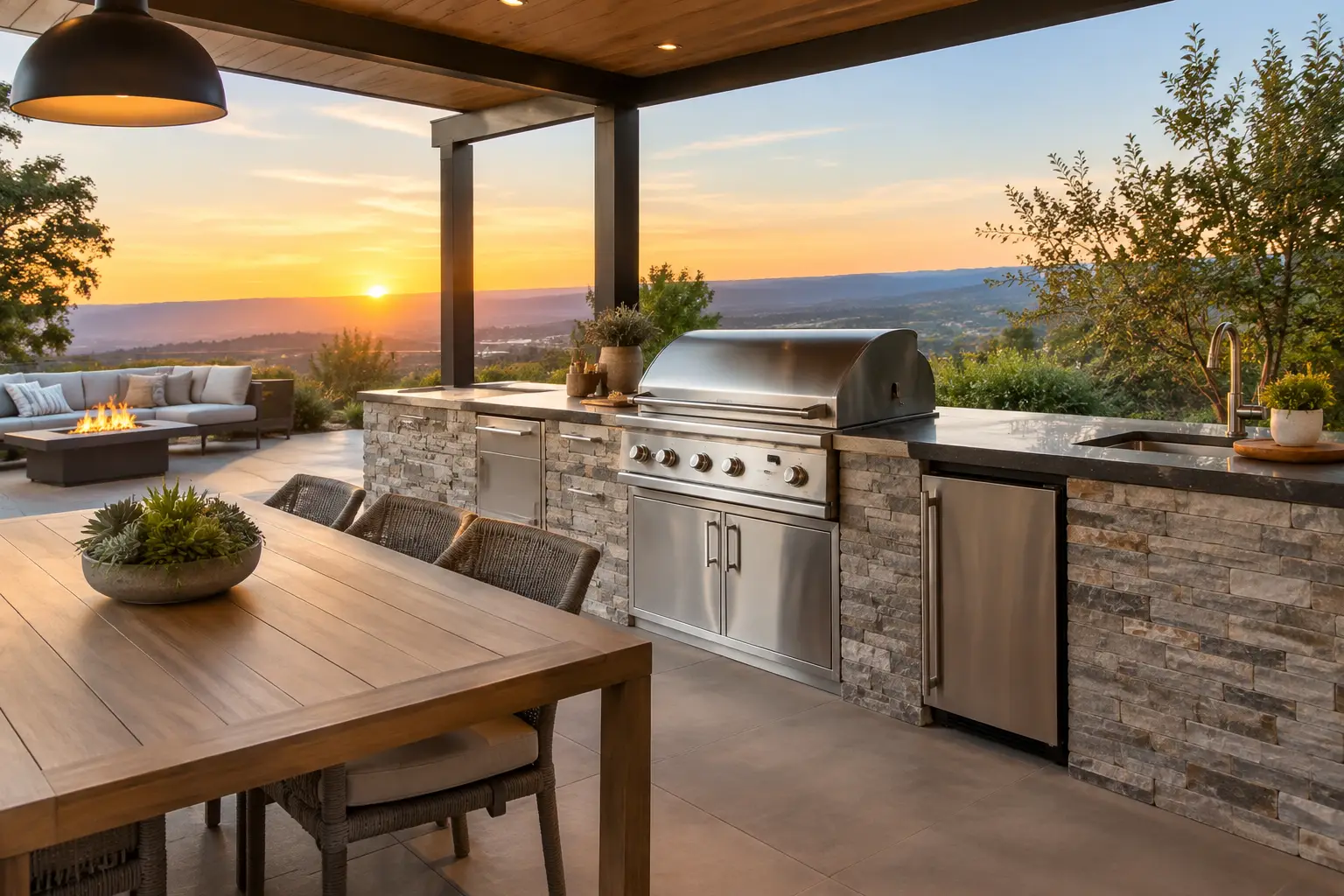
Top Outdoor Kitchen Features Worth Planning For
A backyard grill is useful. A well-planned outdoor kitchen changes how a home is used, giving family and guests a comfortable place to gather while keeping the cook part of the conversation. The top outdoor kitchen features are not always the flashiest additions. They are the details that make cooking, serving, cleaning, and relaxing outside feel practical week after week.
For homeowners in Vacaville, Fairfield, Dixon, and nearby communities, the right design also needs to stand up to hot summer afternoons, seasonal rain, wind, and regular use. The best approach is to start with how you actually entertain, then select features that support those routines without overcrowding the patio.
Top Outdoor Kitchen Features That Improve Daily Use
An outdoor kitchen should work as a complete cooking and gathering area, not simply a grill surrounded by cabinetry. Prioritizing the essentials first creates a space that feels intentional and leaves room in the budget for the finishes and upgrades that matter most.
A built-in grill sized for your household
The grill is usually the centerpiece, but bigger is not automatically better. A couple that grills several nights a week may be well served by a quality, moderately sized built-in grill with reliable heat control. Homeowners who regularly host larger family gatherings may benefit from extra burners, a griddle surface, or a separate side burner for sauces and side dishes.
Placement matters as much as the appliance itself. The grill needs adequate clearance from combustible materials and should be positioned so smoke does not blow directly toward seating areas or open doors. A thoughtful layout also gives the cook landing space on both sides of the grill, making it easier and safer to handle platters, tools, and hot food.
Generous counter space
Counter space is one of the most valuable features in an outdoor kitchen, and it is often underestimated during early planning. You need room to set down a tray of marinated food, serve meals buffet-style, and keep drinks away from the cooking zone. A narrow strip beside the grill may look sufficient on a drawing, but it can feel restrictive once guests arrive.
Durable countertops such as natural stone, concrete, or outdoor-rated porcelain can provide a finished appearance while handling outdoor conditions. Material selection depends on the desired look, maintenance expectations, and exposure to direct sun. Dark surfaces, for example, can become quite hot in Solano County summers, while highly textured materials may require more effort to keep clean.
Storage that keeps supplies within reach
Outdoor-rated drawers and cabinets reduce trips back and forth to the house. They provide a place for grill tools, serving pieces, paper goods, seasonings, and cookware intended for outdoor use. Closed storage also keeps these items protected from dust, weather, and pests.
Stainless steel remains a practical option because it is durable and easy to clean, though quality varies and lower-grade materials can show wear sooner in exposed locations. Masonry or stucco kitchen bases with weather-resistant cabinet components can complement the home’s exterior and create a more permanent custom look. The right choice should coordinate with the overall patio design rather than treating the kitchen as a separate feature.
A sink and practical cleanup zone
A sink is not necessary for every outdoor kitchen, but it can significantly improve convenience. It gives the cook a place to rinse produce, wash hands, fill a pot, or clear dishes before bringing them indoors. For households that entertain frequently, this small addition can make the entire space function more smoothly.
A sink requires careful coordination during design and construction. Water supply, drainage, fixture selection, and permitting requirements need to be addressed as part of the project, not added as an afterthought. If a full sink does not fit the plan or budget, a dedicated prep area with easy access to the indoor kitchen may be the better choice.
Refrigeration where it earns its space
An outdoor-rated refrigerator keeps cold drinks, ingredients, and prepared foods close to the action. It is particularly useful when the kitchen is located away from the home or when guests tend to gather outside for long periods. A beverage refrigerator may be enough for some households, while others will benefit from a larger undercounter unit.
Not every appliance designed for an indoor kitchen is suitable for an exterior installation. Outdoor-rated equipment is built to perform in changing temperatures and is better suited to the demands of a covered patio or exposed kitchen area. Proper ventilation and a protected location help support long-term performance.
Comfort Features That Extend the Season
The best outdoor kitchens make people want to stay outside after the meal is over. Shade, lighting, and seating deserve as much consideration as the cooking equipment because they determine whether the space feels pleasant at different times of day.
Shade and weather protection
A solid patio cover, pergola, or other integrated shade structure can make a major difference during warm afternoons. It helps reduce direct sun on counters and seating, provides a more comfortable cooking environment, and offers some protection during light rain. The appropriate option depends on the home’s architecture, yard orientation, and the level of coverage desired.
A fully covered outdoor kitchen may offer more consistent use, but it also requires careful planning for ventilation, clearances, lighting, and structural support. Open pergolas provide a lighter visual feel and can work well when shade is needed without enclosing the area. There is no universal answer – the right structure should match how often the space will be used and how much sun the yard receives.
Layered lighting for cooking and gathering
Outdoor kitchens need more than one bright fixture overhead. Task lighting near the grill and prep counters helps with safe food preparation after sunset. Softer ambient lighting around seating, pathways, and architectural features creates a more inviting setting for dinner or conversation.
Lighting should be planned early so fixtures, switches, and connections are integrated cleanly into the finished space. Well-placed lighting also helps define the kitchen area without making the backyard feel overly bright or busy.
Seating that supports the way you host
A bar-height counter with stools creates a natural spot for guests to sit near the cook, while a nearby dining area may be better for full meals. Some homeowners prefer a built-in bench that adds seating without taking up as much room as freestanding furniture. The best choice depends on whether your gatherings center on casual drinks, family dinners, game days, or larger celebrations.
Keep circulation in mind. Guests should be able to move between the home, cooking area, and seating without crossing directly in front of a hot grill. This is especially important in compact yards, where every foot has to serve a purpose.
Materials and Layout Matter as Much as Appliances
A beautiful outdoor kitchen can disappoint if the layout creates bottlenecks or the materials do not hold up to the environment. Planning should consider traffic flow, sun exposure, proximity to the house, and the condition of the existing patio or deck. In some cases, updating the surrounding hardscape or adding a properly designed cover provides more value than adding another appliance.
Choose finishes that complement the home and are appropriate for outdoor exposure. Stone veneer, stucco, tile, concrete, and metal can all work well when selected and installed correctly. Consistent craftsmanship at corners, countertop edges, cabinet openings, and transitions to the patio makes the difference between a space that appears pieced together and one that feels like a natural extension of the home.
Construction planning is also the time to address utilities, drainage, and local requirements. Gas lines, electrical connections, water supply, and structural elements should be coordinated by qualified professionals and completed with the permits required for the project. This protects the investment and helps avoid costly revisions once finishes are in place.
Start With Your Routine, Not a Wish List
Before finalizing a design, think through a typical weekend at home. Where do people enter the yard? Who prepares food? Do you need a place for children to eat, a quiet corner for coffee, or room for a larger group? Those answers will help determine whether the priority is a larger grill, deeper counters, more shade, or a better connection between the indoor and outdoor kitchen.
Saitta Construction helps homeowners plan outdoor living spaces with the same attention to function, craftsmanship, and clear communication that goes into an interior remodel. A consultation can clarify what is realistic for your property, budget, and entertaining style before construction begins.
A well-designed outdoor kitchen should make gathering easier, not add another space to maintain. Choose the features you will use most, build them with durable materials, and give the layout enough room to serve your household comfortably for years to come.