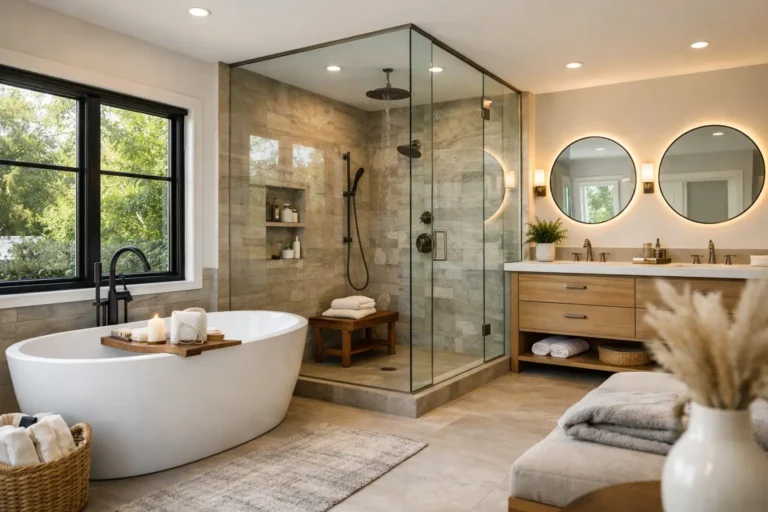
Bathroom Remodel Materials Guide for California Homes
A bathroom may be one of the smallest rooms in a home, but it asks more of its materials than almost any other space. Moisture, daily cleaning, changing temperatures, and constant use can quickly expose weak finishes or poor product choices. This bathroom remodel materials guide helps homeowners choose surfaces and fixtures that look right on day one and continue performing well for years.
The best material is rarely the most expensive option across the board. A successful remodel balances durability, maintenance, budget, style, and the way your household actually uses the bathroom. A busy family bath, a quiet primary suite, and a guest bathroom can each call for different priorities.
Start With the Conditions in Your Bathroom
Before selecting tile or a vanity color, consider the room itself. Is it a compact hall bathroom where every inch of storage matters? Does the primary bath have a walk-in shower used every day? Is there adequate ventilation, or does the room tend to stay damp after showers?
These details affect material decisions. A highly textured floor tile may offer welcome traction, but it can be harder to clean in a busy bathroom. Natural wood finishes can bring warmth to a space, yet they need careful placement and protection around wet areas. Large-format wall tile can create a clean, modern appearance with fewer grout joints, although it requires a properly prepared wall for a polished installation.
In Northern California homes, material selection should also account for the existing home. Older homes in Vacaville, Fairfield, Benicia, and nearby communities may have uneven walls, aging subfloors, or bathroom layouts that benefit from careful planning before finishes are ordered. Good craftsmanship starts behind the visible surfaces.
Bathroom Remodel Materials Guide: Floors and Walls
Tile remains one of the most dependable bathroom materials because it handles moisture well, offers broad design flexibility, and can last for decades when installed correctly. Still, not all tile is the same.
Porcelain Tile
Porcelain is often a strong choice for bathroom floors, shower walls, and shower floors. It is dense, water-resistant, and available in finishes that resemble stone, concrete, or wood. For homeowners who want a low-maintenance material without giving up a high-end look, porcelain is hard to beat.
For floors, pay attention to the tile’s finish. Matte or lightly textured porcelain generally provides better slip resistance than polished tile, especially near a shower or tub. Smaller tile is commonly used on shower floors because the additional grout lines can improve traction and allow the surface to follow the slope toward the drain.
Ceramic Tile
Ceramic tile can be an attractive, cost-conscious option for bathroom walls and lower-traffic floors. It comes in a wide range of colors, shapes, and sizes, making it particularly useful for backsplashes, tub surrounds, and decorative feature walls.
Ceramic is not automatically inferior to porcelain. The right choice depends on where it will be used. For a shower floor or a heavily used family bathroom, porcelain is often the more practical investment. For a wall application with less physical wear, ceramic can deliver excellent results.
Natural Stone
Marble, travertine, slate, and other natural stones bring distinctive character that manufactured materials cannot fully duplicate. Each piece has variation, which can make a bathroom feel custom and refined.
The trade-off is maintenance. Many natural stones need periodic sealing, and some can stain or etch when exposed to certain cleaners or personal-care products. Stone is a good fit for homeowners who appreciate its natural movement and are comfortable with the care it requires. It may not be the best option for a bathroom that needs to be as low-maintenance as possible.
Grout That Supports the Design
Grout is a small detail with a major visual and practical effect. A contrasting grout color emphasizes tile shape and pattern, while a closer color creates a calmer, more continuous surface. Lighter grout can brighten a room but may show discoloration more readily in active bathrooms.
A quality grout selection and proper sealing, where appropriate, help protect the installation. It is also wise to avoid making tile decisions based on a small sample alone. Review larger samples in the bathroom’s actual lighting before finalizing color and finish.
Choose Countertops for Water Resistance and Daily Care
Bathroom counters need to stand up to water, cosmetics, soap, and repeated cleaning. Quartz is a popular choice because it offers a consistent appearance, strong stain resistance, and simple routine maintenance. It works well in both contemporary and traditional bathroom designs.
Natural stone countertops offer more variation and a one-of-a-kind look, but they typically require more attention than quartz. If a homeowner prefers marble or another stone, a contractor can help identify appropriate locations and edge details that support the design while limiting unnecessary exposure to standing water.
Solid-surface counters are another practical option, especially for clean, modern bathrooms. They can be paired with integrated sinks for fewer seams and an easy-to-maintain surface. Laminate has improved in appearance over the years and may work in a guest bath or budget-focused remodel, but its edges and seams must be carefully protected from moisture.
Select a Vanity Built for the Room
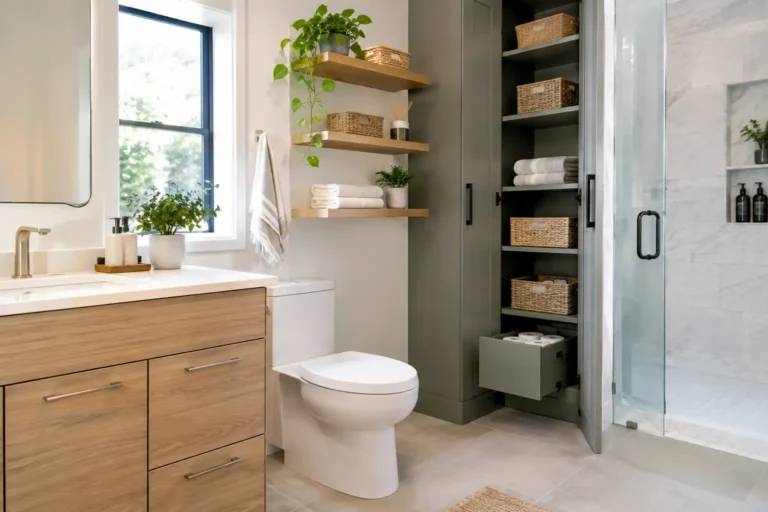
A vanity is both furniture and storage, so appearance should not be the only consideration. In a small bathroom, a floating vanity can expose more floor area and make the room feel more open. In a shared bathroom, a wider cabinet with drawers may provide better organization than a smaller vanity with one large open compartment.
Look for moisture-resistant construction, durable drawer hardware, and a finish suited to bathroom conditions. Solid wood can be beautiful, but engineered materials with quality finishes often provide more predictable stability in humid environments. The goal is not simply to choose a cabinet that fits the wall. It should fit the daily routine, including towels, toiletries, cleaning supplies, and the number of people using the room.
Shower Materials Need More Than a Good Appearance
The shower is where proper material selection and installation matter most. Tile showers offer flexibility in size, layout, niches, benches, and visual style. They also require a complete waterproofing system behind the finished tile. Tile and grout are not the waterproof layer by themselves.
For homeowners who want fewer grout lines, large porcelain panels or solid-surface wall systems can be practical alternatives. These materials can create a sleek appearance and reduce cleaning demands. The best choice depends on the desired design, the bathroom layout, and whether customization or low maintenance is the higher priority.
Shower glass also deserves attention. Clear glass keeps a room visually open, while frosted or textured glass adds privacy. Frameless glass has a clean, tailored look, but it requires accurate measurements and proper support. A well-planned shower should feel comfortable to use, easy to clean, and built around reliable water management rather than appearance alone.
Fixtures and Hardware: Focus on Finish and Function
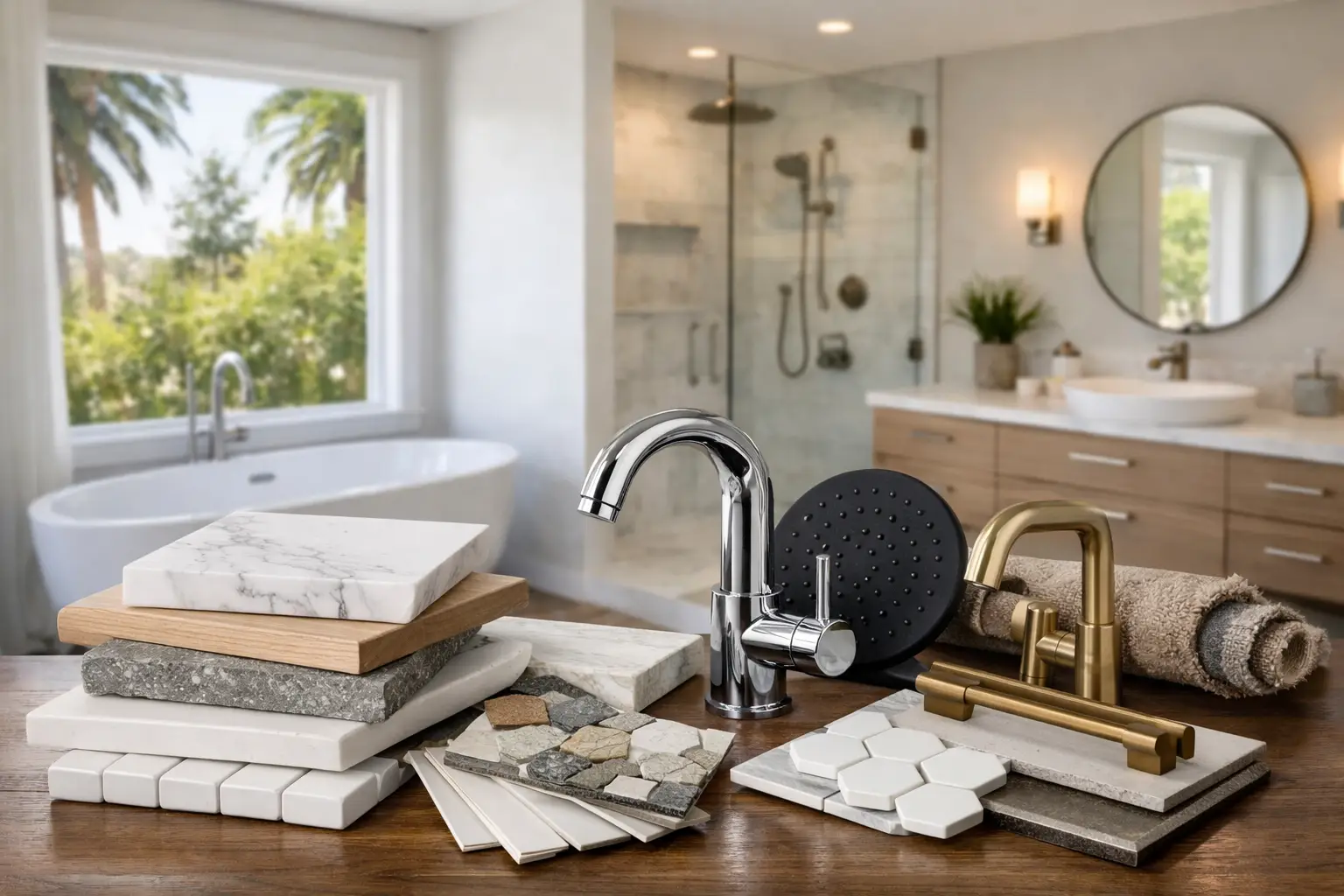
Faucets, shower controls, towel bars, and cabinet pulls tie the room together. Chrome remains a dependable choice because it is widely available, durable, and easy to coordinate. Brushed nickel, matte black, and warm brass finishes can add personality, but availability should be considered if matching accessories or future replacement parts may be needed.
Function matters just as much as finish. A widespread faucet may suit a larger vanity, while a single-hole faucet can keep a compact countertop cleaner and less crowded. In the shower, thermostatic or pressure-balancing controls can improve comfort by helping maintain a more consistent water temperature.
Avoid selecting fixtures solely from photos. Handle feel, spout reach, clearance, and compatibility with the selected sink and countertop all affect the finished result. Coordinating these choices early prevents last-minute changes that can affect both schedule and budget.
Spend Where It Protects the Remodel
Homeowners often ask where to invest and where to save. The most worthwhile investments are usually the elements that are difficult to access after construction: waterproofing, substrate preparation, tile installation, quality valves, ventilation, and durable flooring. These parts support the entire bathroom and are expensive to correct if they fail.
Savings can often be found in areas that are easier to update later, such as mirrors, light fixtures, paint colors, and certain decorative hardware. That does not mean choosing the least expensive option. It means directing the budget toward long-term performance first, then selecting finishes that provide the look you want within the remaining scope.
A bathroom remodel should feel personal, but the best material decisions are grounded in how the room will be used and maintained. When homeowners have a clear plan before construction begins, the finished bathroom is more likely to deliver everyday comfort, lasting value, and confidence in the details that matter most.