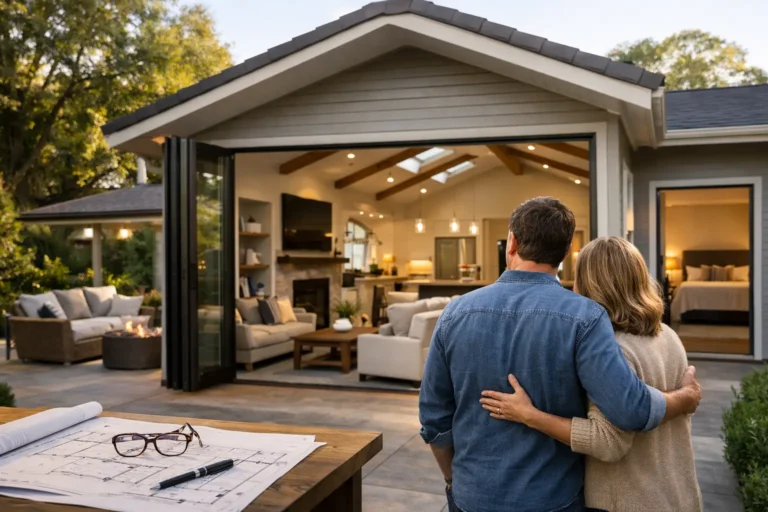
Choosing a Home Addition Contractor Vacaville
A growing family, a work-from-home routine, or a house that no longer fits the way you live can push one question to the top of the list: how do you expand without making an expensive mistake? If you are looking for a home addition contractor Vacaville homeowners can rely on, the right choice comes down to more than price. It comes down to planning, communication, craftsmanship, and a clear process from design through final walkthrough.
A home addition is one of the most significant changes you can make to a property. Unlike cosmetic remodeling, an addition affects layout, structure, permits, timelines, and long-term home value. Done well, it can make your home feel custom-built for your needs. Done poorly, it can create stress, delays, and costs that keep growing.
What a home addition contractor in Vacaville should actually handle
Many homeowners assume the hardest part of an addition is construction itself. In reality, the success of the project often depends on everything that happens before the first wall is framed. A qualified contractor should help guide the full process, including early planning, coordination with design professionals when needed, permit preparation, scheduling, structural considerations, material selections, and construction management.
That matters because home additions involve more moving parts than a standard room update. Tying new square footage into an existing house means matching rooflines, managing foundations, connecting finishes, and making sure the new space feels integrated rather than added on as an afterthought. It also means accounting for local building requirements, neighborhood conditions, and the practical realities of working around an occupied home.
For homeowners in Vacaville and surrounding Solano County communities, local experience is valuable. Soil conditions, lot layouts, older home construction methods, and city approval processes can all affect scope and timeline. A contractor familiar with the region can usually anticipate issues earlier, which helps reduce surprises later.
Why hiring the right home addition contractor Vacaville residents trust matters
An addition is not just about building more space. It is about protecting the investment you already have in your home. When a project is planned carefully, the new area should improve daily life while also supporting resale value. That could mean creating a primary suite, enlarging a kitchen and living area, adding a guest room, or building space for multigenerational living.
The trade-off is that additions require realistic expectations. They are more involved than many homeowners first assume. Depending on the age of the home and the type of addition, the project may uncover structural updates, utility adjustments, or design revisions that need to happen before work can move forward. A reliable contractor does not hide that reality. They explain it clearly, outline likely variables, and help you make informed decisions before the budget gets away from you.
This is where transparency matters. Homeowners are usually not looking for the lowest bid at any cost. They want honest recommendations, dependable scheduling, and a finished result that feels worth the investment. A contractor who communicates well at the beginning is more likely to communicate well when questions come up during construction.
Start with the purpose of the addition
Before comparing estimates, it helps to define what success looks like for your household. Some additions are driven by immediate need, like adding a bedroom or creating more functional family space. Others are about future planning, such as making room for aging parents, improving privacy for older children, or avoiding the cost and disruption of moving.
The purpose affects nearly every part of the project. A family room expansion may focus on open flow, natural light, and connection to outdoor living areas. A primary suite addition may prioritize privacy, bathroom layout, storage, and a quieter part of the house. A second-story addition might make sense on a smaller lot, but it can also involve more structural complexity than a ground-level expansion.
A good contractor will ask about how you live, not just what size room you want. That conversation often leads to better choices about layout, access, and long-term function.
What to look for before signing a contract
Licensing and insurance are the baseline, not the finish line. You also want to know how the contractor manages projects, how clearly they explain scope, and whether they are experienced with additions specifically. Remodeling an existing home takes a different approach than building from scratch. There are hidden conditions, occupied spaces, and transitions between old and new that require careful planning.
Pay attention to how estimates are presented. A professional proposal should be clear about what is included, where allowances apply, and what factors could change pricing. Vague numbers may sound appealing at first, but they often create confusion once the work begins.
It is also reasonable to ask how communication will work during the project. Who is your main point of contact? How are schedule updates handled? What happens if materials are delayed or site conditions change? These are practical questions, and strong contractors should be comfortable answering them directly.
Common home additions and how they differ
Not every addition follows the same path. A bump-out to enlarge a kitchen or bathroom may seem modest, but even small expansions can involve foundation work, exterior reconstruction, and permit review. Room additions for bedrooms, offices, or family spaces often require thoughtful integration with the existing floor plan so the house still feels balanced.
Larger additions, such as expanded primary suites or attached in-law spaces, tend to involve more decisions around plumbing, privacy, access, and energy efficiency. Second-story additions can be especially valuable when lot size is limited, but they also place greater demands on structural engineering and project coordination.
That is why one-size-fits-all timelines and budgets are not realistic. The right contractor should explain where your project falls on that spectrum and what level of complexity to expect.
Budget, timeline, and the reality of “it depends”
Homeowners often want a firm number and a firm completion date early on. That is understandable, but additions rarely fit into a single standard formula. Cost depends on square footage, structural work, finish level, site access, and whether existing systems need modification. Timeline depends on design completion, permit approval, weather, inspections, and material availability.
A trustworthy contractor should still give you a realistic framework. They may not be able to promise every detail upfront, but they should be able to explain what drives cost, where contingencies make sense, and how the project will be phased. Honest planning is far more useful than overly optimistic promises.
For example, expanding into a straightforward single-story footprint may be more predictable than building above an existing garage. Matching older finishes may take more time than installing all-new materials. Homes with past renovations can also present unknowns once walls are opened. None of that means the project is a bad idea. It simply means experience and problem-solving matter.
Why process matters as much as craftsmanship
Quality construction is essential, but the experience of getting there matters too. Homeowners living through an addition need regular updates, organized scheduling, clean jobsite practices, and confidence that details are being tracked. Delays can happen in construction. The difference is how they are communicated and managed.
The strongest contractors create a process that keeps the homeowner informed from the first consultation to the final walkthrough. That includes discussing goals early, setting realistic expectations, documenting scope clearly, and addressing changes before they become expensive surprises.
At Saitta Construction, that full-project approach is part of what helps homeowners move forward with confidence. When design, permits, construction, and final completion are managed with attention to detail, the result is not just more square footage. It is a home that functions better and feels more complete.
When an addition makes more sense than moving
In a market where buying another home may mean higher costs, higher interest rates, or leaving a neighborhood you enjoy, adding onto your current home can be the more practical choice. That is especially true for homeowners who already like their location, school access, lot, or overall layout but need more usable space.
Of course, an addition is not always the right answer. If the existing floor plan has deeper issues, a major renovation combined with an addition may make more sense than simply building outward. In other cases, zoning, lot setbacks, or budget limitations may affect what is possible. A knowledgeable contractor should be candid about those limitations instead of pushing a plan that does not fit the property.
The best additions feel natural from both the inside and the street. They solve real space problems, respect the existing home, and add value in a way that holds up over time.
If your home no longer fits the way you live, the next step is not to rush into construction. It is to have a clear conversation with a contractor who listens carefully, explains the process honestly, and helps you build with confidence.